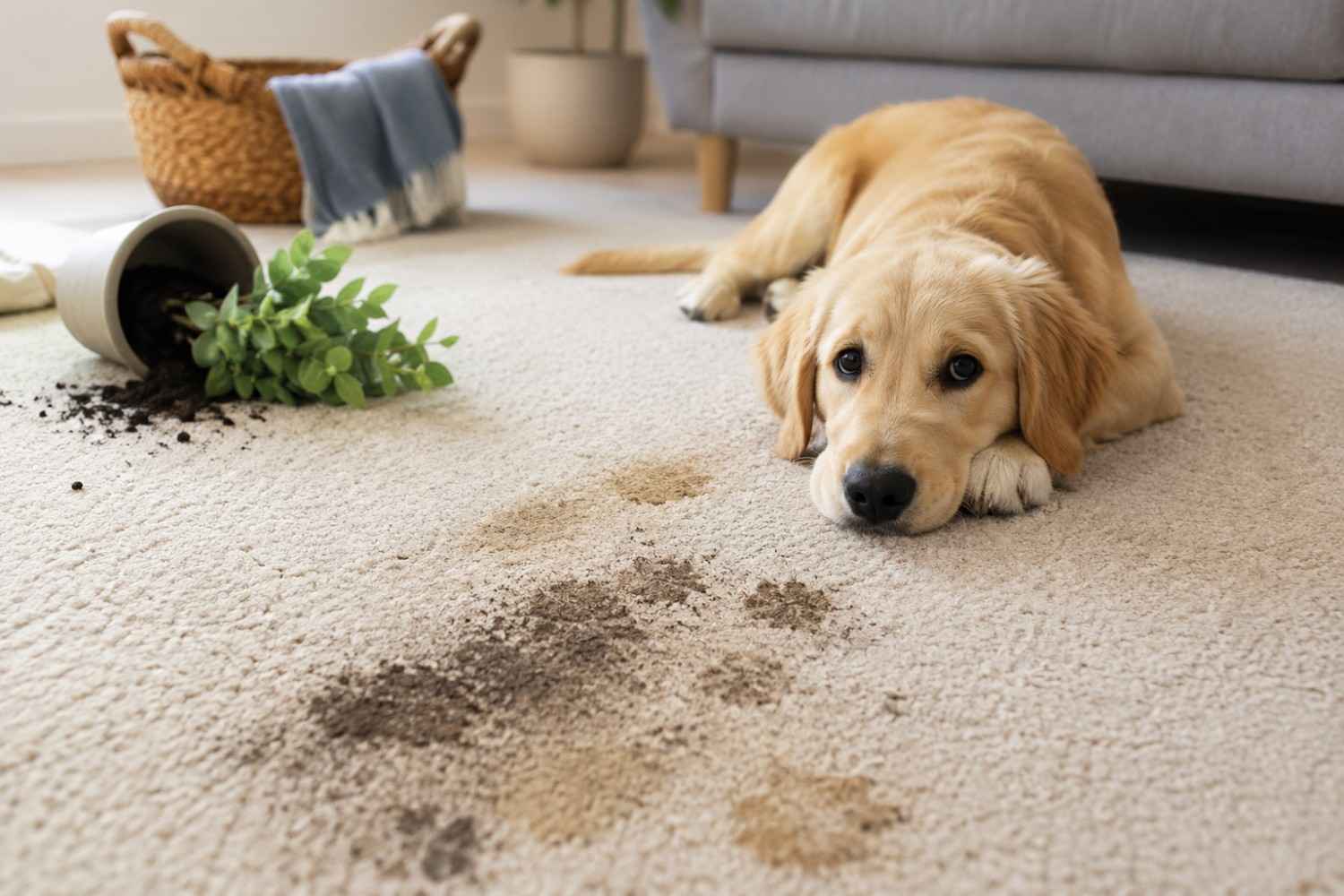

Between sudden monsoon downpours and one of the driest, dustiest summers Utah has seen in years, carpets across the Wasatch Front are taking a beating right now. A quick thunderstorm turns dry yards into mud in minutes, and it only takes one trip through the front door to track it straight onto your living room carpet. Add in the fine dust that blows in ahead of every monsoon cell, and July through September becomes the toughest stretch of the year for keeping carpets clean.
The good news is that mud stains are actually one of the more forgiving carpet problems — if you handle them the right way. Handle them the wrong way, and you can turn a simple footprint into a permanent stain.
The Biggest Mistake: Cleaning Mud While It’s Still Wet
It feels counterintuitive, but the single most important rule for mud stains is to leave them alone at first. Scrubbing wet mud spreads it further into the carpet fibers and pushes it deeper into the pile, turning a surface mark into a much harder problem. The right approach is patience: let the mud dry completely before doing anything else.
Once dry, mud becomes ordinary dirt that lifts out far more easily than a wet, smeared stain ever would.
How to Remove Mud from Carpet the Right Way
- Let it dry completely. Depending on humidity and how thick the mud is, this can take anywhere from an hour to overnight. Resist the urge to blot it while it’s still wet.
- Break up and scrape off the dried mud. Use a dull knife, spoon, or the edge of a credit card to gently lift large chunks without pressing them further into the fibers.
- Vacuum thoroughly. Go slowly and vacuum from multiple directions to lift as much dried soil as possible before introducing any liquid.
- Mix a gentle cleaning solution. The Carpet and Rug Institute recommends a simple detergent solution of about a quarter teaspoon of clear, non-bleach dish soap per cup of lukewarm water for most spot removal — stronger concentrations are more likely to leave a residue that attracts new dirt.
- Blot, don’t scrub. Apply the solution to a clean white cloth and work gently from the outer edge of the stain toward the center. Scrubbing roughs up carpet fibers permanently, while blotting lifts the stain using the fabric’s natural wicking action.
- Rinse thoroughly. Leftover detergent residue is one of the most common reasons carpets seem to resoil in exactly the same spot after cleaning. Blot with plain water afterward to remove any remaining solution.
- Dry completely. Use a fan, open a window, or increase airflow in the room. A carpet that stays damp for too long risks mildew and odor, especially layered on top of Utah’s summer humidity swings.
What Not to Do
- Don’t use laundry detergent. Many contain optical brighteners that can permanently discolor carpet fibers.
- Don’t use automatic dishwasher detergent. These often contain bleaching agents that can strip color from carpet.
- Don’t scrub or use a stiff brush aggressively. This is the single biggest cause of permanently frayed, matted-looking carpet after a stain.
- Don’t oversaturate the area. Too much water can push mud deeper and takes longer to dry, increasing mildew risk.
Preventing Mud and Dust From Becoming a Recurring Problem
A few habits go a long way during monsoon season:
- Use mats both outside and inside every entry point. Give mud and grit somewhere to land before it reaches the carpet.
- Enforce a shoes-off policy during wet weather. Simple, but it’s the single most effective prevention step available.
- Keep a towel by the door for pets. Paws track in as much mud as shoes do, especially after a storm.
- Vacuum high-traffic areas more frequently during monsoon season. The Carpet and Rug Institute recommends vacuuming daily in high-traffic zones and at least weekly elsewhere — and that frequency matters even more when storms are tracking in extra grit every few days.
- Address spots the same day they happen. Letting mud sit for days makes even the correct cleaning method less effective.
Don’t Forget About Dust Between Storms
Mud isn’t the only carpet challenge this time of year. The same dry, drought-stressed soil and gusty winds that precede monsoon storms also blow fine dust into homes on the days in between. Unlike mud, dust doesn’t leave a visible stain, but it settles deep into carpet fibers and can aggravate allergies and reduce indoor air quality over time. Regular vacuuming between storms — not just after visible messes — keeps that buildup from becoming a bigger problem than the mud itself.
When to Call a Professional Instead
DIY methods handle most everyday mud and dust just fine, but a few situations call for professional attention:
- The stain has already dried in for several days before you noticed it, and DIY methods aren’t fully lifting it.
- Red clay or mineral-rich mud has left a stain, since certain soil types bond more stubbornly to carpet fibers than plain garden dirt.
- Large areas are affected after a bigger storm event, rather than a single footprint or two.
- You’re seeing repeated staining in the same spot, which often means residue from a previous cleaning attempt is attracting new dirt.
- It’s been more than 12–18 months since your last deep clean — the general professional cleaning interval recommended for maintaining carpet appearance and extending its lifespan.
Our professional carpet cleaning service uses truck-mounted, high-temperature extraction that removes embedded dirt, allergens, and stains that home equipment typically can’t reach, with chemical-free options for households with kids, pets, or allergy sensitivities. If a storm has tracked in mud across your whole house rather than a single spot, a full professional cleaning is often faster and more effective than working through it room by room.
Frequently Asked Questions
Should I clean mud off my carpet right away or wait?
Wait. Letting mud dry completely before cleaning is the single most important step — cleaning it wet almost always spreads and deepens the stain.
What’s the best homemade solution for mud stains on carpet?
A mild detergent solution — about a quarter teaspoon of clear, non-bleach dish soap per cup of lukewarm water — handles most mud and dirt stains well. Avoid laundry detergent and automatic dishwasher detergent, both of which can discolor carpet fibers.
Can vinegar help remove mud stains?
Yes, a diluted white vinegar solution can help neutralize residue left behind by detergent or alkaline spills, and many homeowners use it as a natural finishing rinse after the initial cleaning.
How often should carpets be professionally cleaned during monsoon season?
Most homes benefit from professional cleaning every 12 to 18 months in general, but heavier monsoon-season traffic and repeated mud tracking may justify scheduling a cleaning sooner if visible buildup or staining accumulates faster than usual.
Will mud stains permanently damage my carpet?
Not if handled correctly. The most common cause of permanent-looking damage isn’t the mud itself — it’s scrubbing while the mud is wet, which frays and mats the fibers in that spot.
Final Thoughts
Utah’s monsoon season puts real, repeated stress on carpets — mud from sudden storms, dust from the dry stretches in between, and constant foot and paw traffic tracking both inside. The fix isn’t complicated: let mud dry, blot instead of scrub, rinse thoroughly, and stay ahead of dust with more frequent vacuuming through September. For anything beyond routine spot cleaning, or a full-home refresh after a rough storm season, professional cleaning gets carpets back to looking — and staying — genuinely clean.
Dealing with monsoon mud or stubborn stains? Call (801) 750-2928 for a free carpet cleaning estimate, or explore our full range of cleaning services for homes across the Wasatch Front.