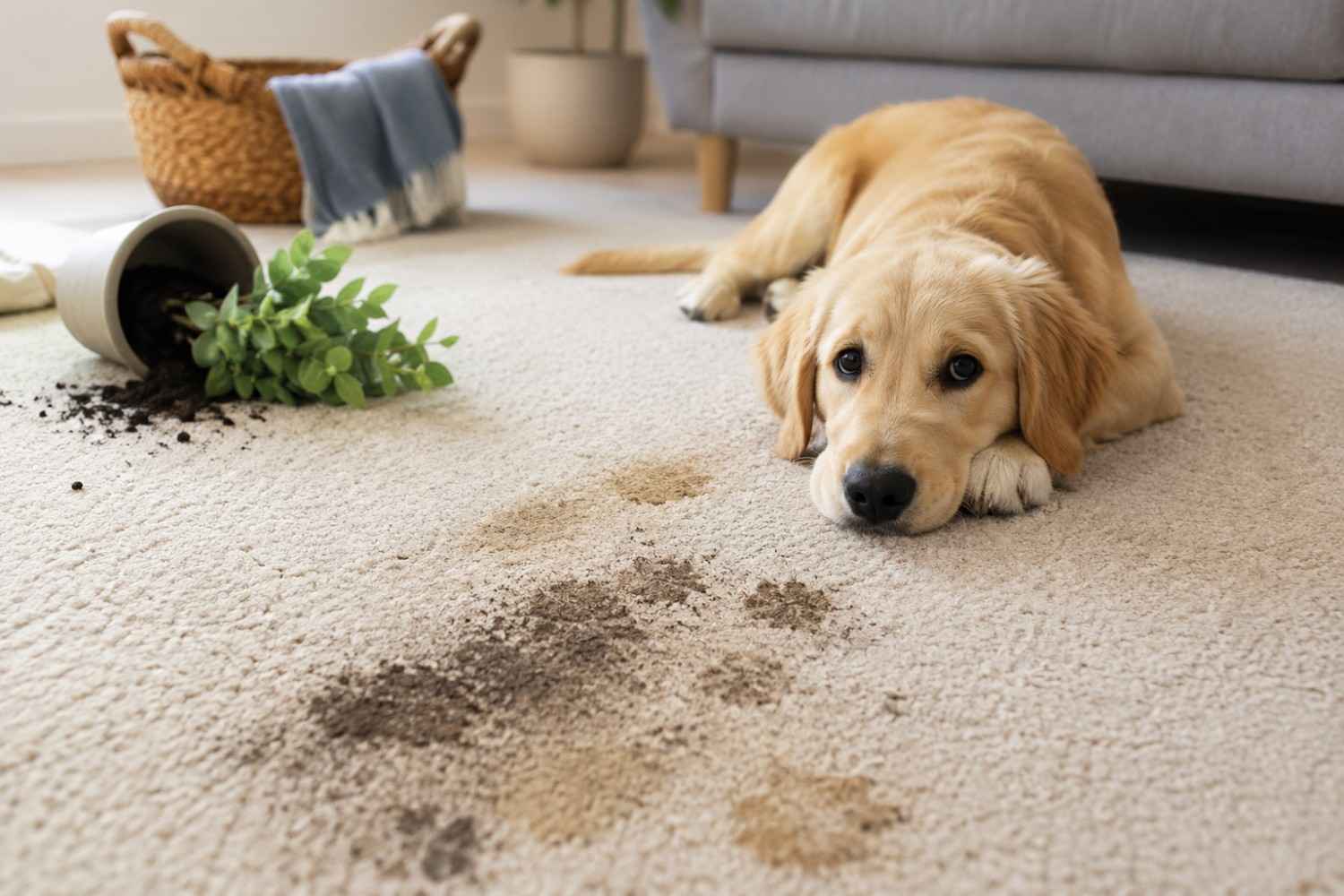
Anyone who’s lived with a dog or cat knows the moment: you catch a whiff of something in the living room, and a quick investigation turns up a stain that definitely wasn’t there yesterday. Regular carpet cleaners often don’t fully solve the problem, and the odor has a way of coming back — sometimes weeks later, especially on a humid day or after the heat kicks on.
That’s not bad luck. Pet stains behave differently than ordinary dirt or spills, and treating them the same way usually leaves the real problem behind.
Why Pet Stains Are Different From Regular Dirt
Pet urine contains uric acid crystals that bond tightly to carpet fibers as they dry. Regular carpet cleaners and surface cleaning can lift the visible stain and smell temporarily, but the crystals themselves often remain behind, embedded deep in the fibers and sometimes down into the padding. When humidity rises or the crystals get slightly damp again, they release odor all over again — which is why a “cleaned” spot can start smelling musty weeks or months later.
This is also why simply masking the smell with air freshener or a scented carpet powder never actually solves anything. It covers the odor for a while, but the crystals causing it are still there.
The Single Biggest Mistake: Using Heat
It feels natural to reach for a steam cleaner on a stain, but heat is one of the worst things you can do to a fresh pet accident. High heat can permanently set the proteins in pet urine into the carpet fibers, making the stain and odor significantly harder — sometimes impossible — to remove afterward. If you only remember one rule from this guide, it’s this: treat pet stains with cold or room-temperature methods first, and save steam cleaning for after the stain and odor have already been addressed.
How to Actually Remove a Pet Stain
- Blot, don’t rub. For a fresh accident, use paper towels or a clean, absorbent cloth to blot up as much liquid as possible, pressing down firmly. Rubbing pushes the stain deeper into the fibers and can damage the carpet pile.
- Rehydrate old, dried stains before treating them. If you’re dealing with a stain that’s already dried, a small amount of cool water helps reactivate it so a cleaning solution can actually reach the crystals rather than just sitting on top.
- Use an enzymatic cleaner, not a general carpet cleaner. According to Consumer Reports, the most effective products for pet stains and odors are either bio-enzymatic cleaners, which use enzymes and safe bacteria to break down the compounds causing the smell, or oxidizing cleaners containing hydrogen peroxide, which work faster but require more caution around colorfast surfaces. Regular all-purpose cleaners typically don’t break down these compounds at all.
- Saturate the full area, not just the visible spot. Urine typically spreads wider underneath the carpet than the visible surface stain suggests. Treating only the stain you can see often leaves untreated crystals at the edges.
- Let the cleaner sit for the recommended dwell time. Enzymatic cleaners need time — often 15 minutes to several hours, sometimes overnight for older stains — to fully break down the odor-causing compounds. Wiping it up too soon undercuts the treatment.
- Blot dry and allow full air drying. Avoid heat here too. A fan or open window speeds up drying without risking the same heat-set problem.
Common Mistakes That Make Pet Odors Worse
- Steam cleaning before treating the stain. As covered above, heat can permanently bond urine proteins to carpet fibers.
- Scrubbing vigorously. This spreads the stain and can fray or mat carpet fibers, sometimes permanently.
- Using ammonia-based cleaners. Urine itself breaks down into ammonia-like compounds, and cleaning with an ammonia-based product can actually attract pets back to the same spot rather than deterring them.
- Relying on scent-masking products alone. Fragranced sprays and powders cover the smell temporarily but don’t remove the crystals causing it.
- Only treating the carpet surface. If an accident has soaked through to the padding or subfloor, surface treatment alone won’t resolve the odor — the moisture and crystals are still present beneath what you’re cleaning.
Pet Stains on Upholstery and Rugs Need Extra Care
The same enzymatic approach applies to upholstered furniture and area rugs, but both require extra caution:
- Upholstery often has fabric-specific cleaning requirements, and some enzymatic products aren’t safe for delicate or specialty fabrics. Check manufacturer cleaning codes (often found on a tag underneath cushions) before applying anything.
- Wool and specialty rugs — Persian, Oriental, and other fine wool rugs — can be damaged by the wrong cleaning solution or by machine extraction methods not suited to natural fibers. These typically need gentler handling than synthetic wall-to-wall carpet.
When to Call a Professional Instead
A few situations call for professional-grade treatment rather than continued DIY attempts:
- The odor keeps returning after cleaning, which usually means urine has reached the padding, subfloor, or even the carpet backing where home treatments can’t fully reach.
- Multiple spots or a whole room is affected, particularly common with new puppies, kittens, or older pets with health-related accidents.
- It’s a wool or specialty rug, where the wrong at-home treatment risks permanent damage to the fibers or dye.
- You’ve already tried steam cleaning on the stain, and it seems to have set in rather than improved — professional treatment methods can sometimes still address stains that heat has partially set, though results vary depending on how long ago it happened.
- Someone in the home has allergies or asthma, since pet dander and residual odor compounds can continue affecting indoor air quality even after a stain looks clean.
Our professional carpet cleaning service uses truck-mounted extraction with pet-safe treatment options that reach deeper into carpet and padding than most home equipment can, and our upholstery and rug cleaning services are suited to the more delicate fabrics and fibers that need a gentler approach.
Frequently Asked Questions
Why does the smell come back after I’ve already cleaned the spot? This usually means the urine reached the carpet padding or backing, not just the visible fibers. Surface cleaning can remove the smell temporarily, but if uric acid crystals remain underneath, humidity or warmth can reactivate the odor later.
Is it true that steam cleaning makes pet stains worse? Yes, in most cases. Heat can permanently set the proteins in pet urine into carpet fibers, making the stain and odor considerably harder to remove afterward. Treat the stain with a cold-water, enzymatic approach first.
What’s the difference between enzymatic and oxidizing pet stain cleaners? Enzymatic cleaners use enzymes and safe bacteria to break down odor-causing compounds over a longer dwell time and tend to be gentler on surfaces. Oxidizing cleaners, which often contain hydrogen peroxide, work faster but require more care around colorfast fabrics and surfaces.
Can old, dried pet stains still be removed? Often yes, though it typically takes more effort than a fresh stain. Rehydrating the area slightly before applying an enzymatic cleaner helps the product actually reach the dried crystals rather than sitting on the surface.
How do I stop my pet from returning to the same spot? Beyond fully removing the odor (pets are drawn back to areas that still smell like previous accidents, even faintly), avoid ammonia-based cleaners, which can mimic the smell of urine rather than eliminating it.
Final Thoughts
Pet stains and odors aren’t just a bigger version of a regular spill — they behave differently, and treating them like ordinary dirt is usually why the smell keeps coming back. Blot instead of scrub, use an enzymatic cleaner rather than a general all-purpose one, treat the full affected area, and save the steam cleaner for after the stain has already been addressed, not before. For stains that keep returning, affect a wool rug, or have already been set in by heat, professional treatment reaches what home methods usually can’t.
Dealing with a pet stain or odor that won’t fully go away? Call (801) 750-2928 for a free estimate, or explore our full range of cleaning services for homes across the Wasatch Front.