Short answer: Restaurant mold almost always comes from moisture that stays put: a slow leak, condensation, a clogged drain, or a wet area that never dries. To prevent it, fix leaks fast, dry anything wet within 24 to 48 hours, keep humidity under control, and inspect the damp spots every day, week, and month. If mold covers a large area or keeps coming back, call a professional.
A restaurant is a perfect setting for mold. It has steam, grease, drains, dishwashers, ice machines, walk-in coolers, and floors that get wet all day. Mold needs very little: moisture, a food source such as dust, grease, or drywall paper, and time. A kitchen supplies all three.
For a restaurant, mold is more than a cleaning problem. It can mean a failed health inspection, a closed dining room, damaged equipment, spoiled stock, and guests who stop trusting your kitchen. This guide shows where mold hides in food service spaces, what to check and when, and what to do if you find it.
Found mold or a leak in your restaurant? Call (801) 750-2928 for 24/7 response from a Utah team that works around your service hours. See our mold removal and commercial water damage restoration services.
Why Restaurants Get Mold
Mold grows where water lingers. The EPA says that drying water-damaged areas and items within 24 to 48 hours helps prevent mold growth, according to its brief guide to mold, moisture, and your home. In a restaurant, many things work against that window:
- Daily steam and humidity from cooking, dish machines, and hot water.
- Frequent small leaks from sinks, ice machines, soda lines, and dishwashers. A little drip each day adds up.
- Condensation on cold pipes, walk-in cooler walls, and ceilings.
- Grease and food residue that feed mold on surfaces.
- Busy staff and tight schedules that leave wet mats, mop buckets, and floors to dry on their own.
- Hidden spaces behind equipment, inside cabinets, and above ceilings that no one checks.
Utah’s dry climate can create a false sense of safety. The outside air may be dry, but mold does not care about the weather outside. It needs moisture in the spot where it lives, and a kitchen creates that moisture all day.
The Spots Where Restaurant Mold Hides
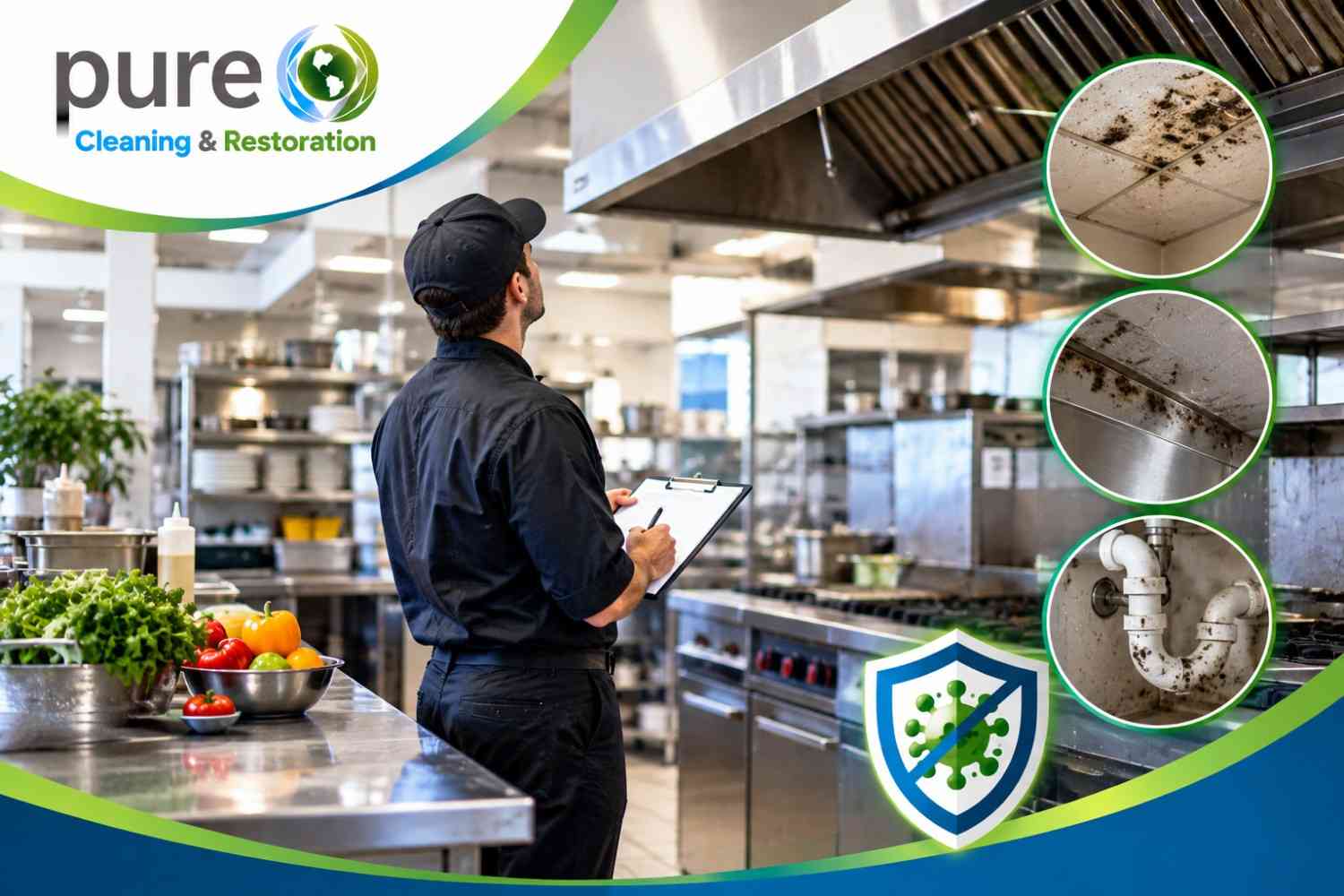
Check these places first. Most owners only look at what guests or inspectors can see.
| Location | Why mold grows there | What to look for |
|---|---|---|
| Under and inside sink cabinets | Slow supply or drain leaks | Dark spots, swollen wood, musty smell |
| Behind and under refrigeration and ice machines | Condensation and drain leaks | Stains on walls and floors, damp insulation |
| Walk-in cooler and freezer seals and ceilings | Cold surfaces meet warm air | Black or green spots on gaskets, ceiling panels, door frames |
| Ice machines | Water, warm air, and little cleaning | Slime or pink or black film on interior parts |
| Dish pit walls and floors | Constant spray and steam | Mildew on grout, drywall, and baseboards |
| Ceiling tiles and corners | Steam rises and roof or pipe leaks | Brown rings, sagging tiles, spotting |
| Floor drains and grease traps | Standing water and organic buildup | Slow draining, odor, growth around the rim |
| Restrooms | Poor ventilation and wet floors | Mold on caulk, grout, and behind toilets |
| Dry storage and basements | Damp walls, boxes on the floor | Musty smell, damp cardboard |
| HVAC drip pans and vents | Condensation and dust | Standing water, slime, spotty vents |
Kitchen grout and tile can hold dirt and moisture if they are not cleaned and sealed. Our tile and grout cleaning service restores floors and walls that have started to look dark or smell musty, but the leak or moisture source must be fixed first.
Daily, Weekly, and Monthly Mold Checks
Prevention works best when it is a routine with named owners. Here is a simple schedule you can print and post.
Daily (opening or closing manager)
- Look under sinks and around the dish machine for leaks or wet cabinets.
- Check that floor mats and mop buckets are emptied and dried.
- Run exhaust hoods and fans during cooking and cleaning.
- Wipe up standing water on floors and counters.
- Check floor drains for slow flow or standing water.
Weekly (kitchen manager)
- Check the area behind and under the ice machine, refrigeration, and dish machine.
- Inspect walk-in cooler door gaskets and ceiling panels for spotting.
- Empty and clean drip pans and drain lines you can reach.
- Check restroom caulk, grout, and under-sink areas.
- Look at dry storage for damp boxes or musty smells.
Monthly (owner, GM, or facilities)
- Look at ceilings, corners, and wall transitions for stains or sagging.
- Check roof penetrations, rooftop units, and window and door seals.
- Read humidity in the dining room, kitchen, and storage if you have a meter.
- Review leaks that happened and whether they were fully fixed.
- Walk the building as an inspector would, with a flashlight.
Write down what you find and what you did. Records help with insurance claims, landlord disputes, and staff training.
Control Humidity and Airflow
The EPA says indoor humidity should be kept below 60 percent, ideally between 30 and 50 percent. A cheap hygrometer shows you where you stand. It also recommends using exhaust fans or opening windows when cooking, running the dishwasher, or dishwashing.
For a restaurant, that means:
- Use hoods and exhaust fans every time you cook and wash.
- Make sure replacement air works. If the kitchen is under negative pressure, humid air gets pulled into walls and ceilings.
- Keep HVAC drip pans clean and drain lines flowing. The EPA lists this as a basic moisture control step.
- Insulate cold pipes so they do not sweat.
- Use dehumidifiers in damp storage or basement spaces, but treat them as a stopgap. They do not fix a leak.
Fix the Moisture Source First
Cleaning visible mold without fixing the water source is the most common mistake. The mold will return. Ask these questions:
- Where is the water coming from? A leak, condensation, a drain, a roof, or a wall?
- How long has the area been wet?
- Has the material behind the surface stayed wet?
- Who needs to fix it: a plumber, an HVAC technician, a roofer, or the landlord?
In a leased space, report building leaks to the landlord in writing and keep copies. Your lease may assign who pays for what.
What to Do If You Find Mold in Your Restaurant
Stay calm, and work in this order.
- Stop the moisture. Turn off the water to a leaking fixture, fix the drain, or block the condensation source.
- Keep staff and food away from the area. Cover or move open food, clean utensils, and prep surfaces. Do not scrub or brush dry mold in the kitchen, because that can spread spores.
- Take photos and notes. Record the date, location, and size.
- Check the size. The EPA says that if the moldy area is less than about 10 square feet (roughly a 3-foot by 3-foot patch), you can usually handle the cleanup yourself. Larger areas call for more help, and its mold cleanup guidance points you to its remediation guidance for those cases.
- Clean hard surfaces correctly. The EPA advises scrubbing mold off hard surfaces with detergent and water and drying completely. It also says porous materials, such as ceiling tiles and carpet, may have to be thrown away if they become moldy.
- Do not paint or caulk over mold. The EPA is clear on this.
- Never mix cleaning chemicals, such as bleach and ammonia.
- Call your local health department or inspector if you are unsure about what it means for your operation. They decide what is acceptable in a food service area, not a vendor.
When to call a professional
Call a restoration company when:
- Mold covers more than about 10 square feet.
- It is in drywall, insulation, ceiling tile, or other porous material.
- You see it again after cleaning.
- There was a pipe break, sewage backup, or other significant water event.
- You smell mold but cannot find it. The source may be inside a wall or ceiling.
- Staff report symptoms such as sneezing, coughing, or headaches that seem tied to one area.
A professional can find the source with moisture meters, contain the area so spores do not spread to food prep zones, remove damaged materials, dry the structure, and document the work. See our mold removal service for how that works, and our commercial water damage restoration page if the cause was a pipe, appliance, or roof leak.
Mold After a Leak, Flood, or Sewage Backup
Big water events matter because wet drywall, insulation, and flooring can start growing mold in a day or two. If you have a burst pipe, a dishwasher failure, or a flooded dining room, begin extraction and drying right away. Our water damage restoration team handles emergency water removal 24/7, and we also respond to sewage cleanup calls. Sewage is a health hazard, so keep staff and guests out until it is handled properly.
Quick response also shortens downtime, which matters when each closed day costs you revenue.
Mistakes That Cause Repeat Mold in Restaurants
- Cleaning the surface and ignoring the source.
- Putting new drywall or paint over damp material.
- Letting wet mats and cardboard sit in storage or under sinks.
- Skipping ice machine cleaning. Follow the maker’s directions.
- Ignoring a small musty smell. It is usually the first sign.
- Blocking air movement with tightly packed storage against walls.
- Waiting to report a roof or wall leak to the landlord.
- Relying on a dehumidifier to hide a leak.
Mold, Insurance, and Documentation
Insurance policies for businesses differ. Some cover mold only when it results from a covered event such as a sudden pipe burst, and some limit or exclude it. Read your policy or ask your agent before a problem happens. After an incident, document everything: photos, dates, repair invoices, and the drying and cleaning records from your contractor. Report water events quickly, because delays can complicate a claim.
Quick Mold Prevention Checklist for Restaurant Owners
- Fix leaks the same day you find them.
- Dry anything wet within 24 to 48 hours.
- Keep humidity under 60 percent, ideally 30 to 50 percent.
- Run hoods and exhaust fans when cooking and washing.
- Clean ice machines, drip pans, and drains on schedule.
- Check hidden spots weekly: under sinks, behind equipment, cooler gaskets.
- Inspect ceilings and corners monthly.
- Keep written logs.
- Call a professional for larger or repeat mold.
For building-wide prevention, see our water heater leak guide and commercial water damage prevention checklist (links once live). Our commercial cleaning checklist for Utah offices shows how a regular cleaning routine supports a healthier building.
Why Utah Property Owners Call Pure Cleaning and Restoration
Every day a restaurant is closed costs you money. We plan the work to limit downtime, contain affected areas, and give you records for your insurer and your inspector.
- 24/7 emergency response across the Wasatch Front, including nights, weekends, and holidays.
- Veteran-owned and serving Utah since 2011, based in Kaysville.
- Professional extraction, drying, and moisture monitoring, not just fans and towels.
- We work with your insurance company and give you the documentation they ask for.
- One team for restoration and cleaning, from water removal to carpet, tile, and upholstery cleaning afterward.
- Local service areas include Salt Lake, Davis, Weber, Utah, Summit, Wasatch, Morgan, Box Elder, and Cache counties. See our service areas.
Ready to get it handled? Call (801) 750-2928 and tell us what happened. We will tell you what to do next, even if it is not a job for us.
Frequently Asked Questions
What causes mold in a restaurant?
Mold in restaurants is caused by moisture that lingers: leaks under sinks and dishwashers, condensation on coolers and pipes, wet floors, poor ventilation, and slow drying after spills. Grease and dust give it something to feed on.
Where does mold usually grow in a commercial kitchen?
Common hiding spots include under and behind sinks, ice machines, and refrigeration, around walk-in cooler gaskets and ceilings, in dish pit walls and grout, in floor drains, in ceiling corners, and in HVAC drip pans.
Can I clean restaurant mold myself?
Small patches on hard surfaces can usually be cleaned by staff. The EPA says areas under about 10 square feet can generally be handled without a professional. Mold in drywall, ceiling tile, or other porous materials, larger areas, or repeat growth should be handled by a professional.
Will mold shut down my restaurant?
That decision belongs to your local health department or inspector. Visible mold in food preparation, storage, or dining areas can lead to violations, so deal with it quickly and ask your local office what they expect.
How fast does mold grow after a leak?
The EPA recommends drying wet areas and items within 24 to 48 hours to prevent mold growth. After that, the risk goes up, especially in porous materials like drywall, insulation, and ceiling tile.
How often should I inspect for mold in my restaurant?
Do quick daily checks for leaks and wet mats, deeper weekly checks of equipment areas, and a monthly walk-through of ceilings, corners, and storage. Check right away after any leak, spill, or storm.
Do I need mold testing?
Testing is not needed to decide on cleanup when mold is visible. Find and fix the moisture source, then remove or clean the mold. A professional can advise when testing makes sense, such as hidden growth or an unexplained odor.
Final Thoughts
Restaurants cannot avoid water, so the goal is to keep it from sitting. A short daily check, a weekly look behind the equipment, and a quick response to every leak will prevent most mold problems before guests or inspectors ever see them. When mold is large, hidden, or keeps returning, a professional can find the cause and clean it up properly so you can reopen with confidence.
Found mold or water damage in your restaurant or commercial kitchen? Call Pure Cleaning and Restoration at (801) 750-2928 for 24/7 emergency response across the Wasatch Front.
Related Reading on Our Site
- Mold Removal Services
- Commercial Cleaning Checklist for Utah Offices
- How to Prevent Costly Water Damage
- Commercial Water Damage Prevention Checklist for Utah (add link once live)
- Water Heater Burst or Leaking: What to Do First (add link once live)
External Sources Used
- U.S. EPA, A Brief Guide to Mold, Moisture, and Your Home (24 to 48 hour drying, humidity targets, exhaust fans, HVAC drip pans): https://www.epa.gov/mold/brief-guide-mold-moisture-and-your-home
- U.S. EPA, Mold Cleanup in Your Home (10 square foot guidance, hard vs. porous materials, do not paint or caulk over mold): https://www.epa.gov/mold/mold-cleanup-your-home