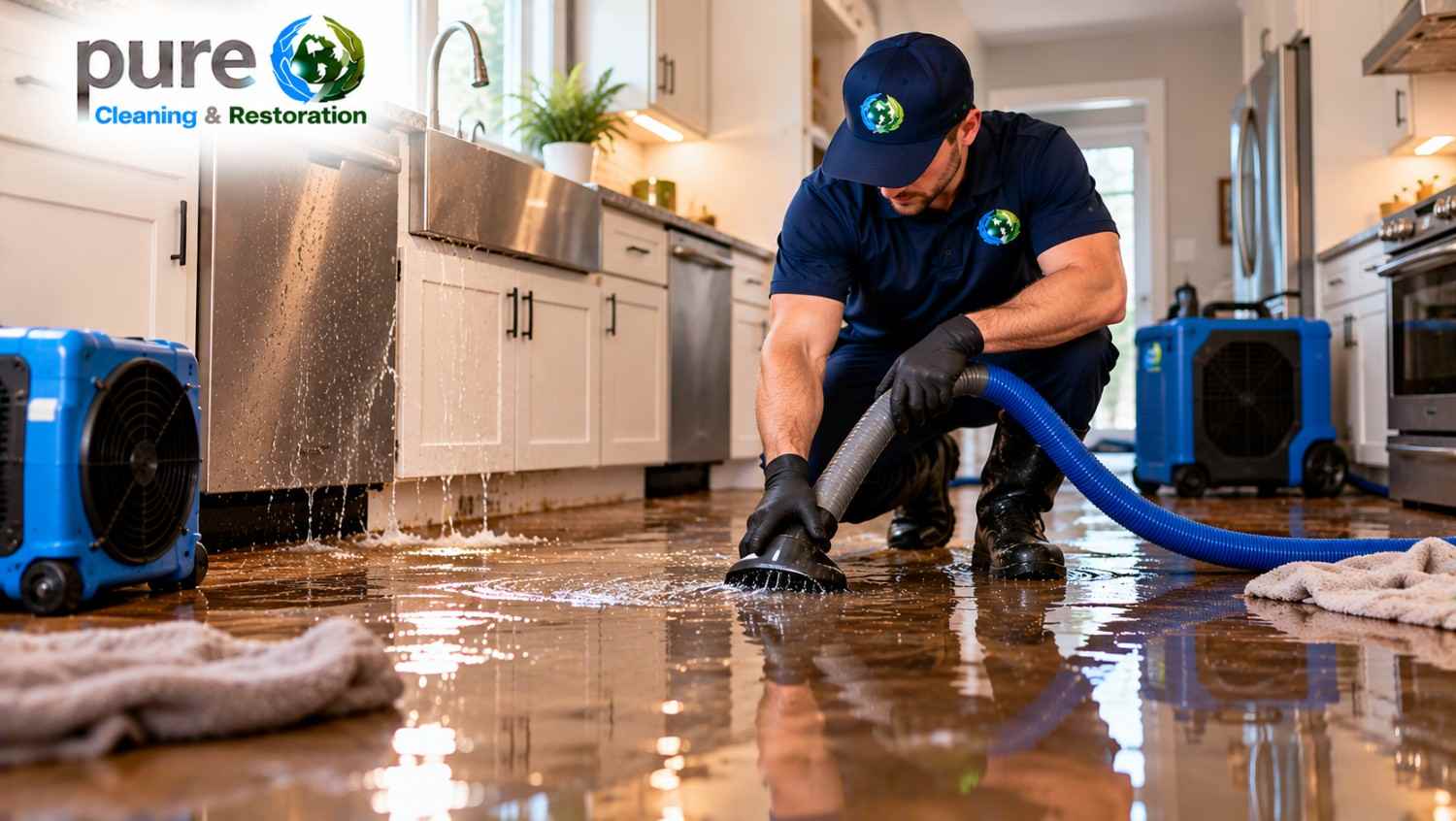
The kitchen is one of the most common rooms in a home for water damage to start — and for good reason. It’s packed with more water-connected appliances and fixtures than almost any other room: the dishwasher, the refrigerator’s ice maker line, the sink, and often a garbage disposal, all running water lines that can fail. When one of them does, water spreads fast across hard flooring and under cabinetry before most people even realize what’s happening.
Here’s exactly what to do, in order, if you’re dealing with this right now.
Step 1: Stop the Water Source
Before anything else, find where the water is coming from and stop it:
- If it’s the dishwasher, sink, or a specific appliance, shut off the water supply valve for that fixture — usually located under the sink or behind the appliance.
- If you can’t identify the source, or it’s spreading fast, shut off your home’s main water valve entirely rather than losing time searching.
- If water is coming from upstairs (a bathroom or laundry room above the kitchen), the source may not be in the kitchen at all — check upstairs plumbing before assuming it’s a kitchen-specific issue.
Step 2: Cut Power to the Area
Water and electricity in the same space is a genuine safety hazard, not just a theoretical one. Turn off power to the kitchen at the breaker panel if water has reached — or could reach — outlets, the dishwasher, or any plugged-in appliances. Don’t touch electrical switches or outlets with wet hands, and don’t step into standing water near an active electrical source.
Step 3: Document Before You Clean Anything Up
Take photos and video of the water, the source if visible, and any items or cabinetry affected — before you start moving things or mopping up. According to the Insurance Information Institute, water damage and freezing account for roughly 22.6% of all homeowners insurance claims, with an average claim cost exceeding $15,000 — meaning this is common enough that insurers have well-established documentation expectations, and skipping this step can genuinely affect your claim later.
Step 4: Remove Standing Water and Salvageable Items
- Rugs and mats should be pulled out immediately — they hold water against flooring and can develop mold within a day or two if left in place.
- Small appliances and items on lower shelves or the floor should be moved to a dry area.
- Use towels, a mop, or a wet/dry shop vacuum for standing water on hard flooring — a regular vacuum should never be used on standing water.
- Cabinet contents near the water source (under the sink, near the dishwasher) should be removed so the cabinet interior can dry and be inspected.
Step 5: Check Under Cabinets and Behind Appliances
This is the step most people skip, and it’s the one that causes the most long-term damage. Water from a kitchen leak often travels under cabinets and behind appliances rather than staying visible on the floor. Open the cabinet doors under the sink and near the dishwasher, and if you can safely do so, pull appliances away from the wall slightly to check behind them. Cabinet bases (often particleboard) absorb water quickly and can swell or develop mold even when the visible floor looks fine.
Step 6: Start Air Circulation Immediately
Open windows if weather allows, run fans, and if you have one, run a dehumidifier in the kitchen. The goal is drying the space as fast as possible — restoration industry guidance generally points to a 24-to-48-hour window before mold risk increases significantly. This applies to hard flooring, cabinet interiors, and the wall base behind and around affected cabinetry, not just visibly wet surfaces.
Common Causes of Kitchen Flooding
Knowing the source helps you know what to check and what to expect going forward:
- Dishwasher leaks — a failed door seal, cracked hose, or drain line issue, often building slowly before becoming an obvious flood.
- Sink and faucet supply line failures — worn or corroded connections under the sink are a common and often preventable cause.
- Refrigerator ice maker line leaks — an easy one to miss since the line often runs behind the refrigerator, out of sight.
- Garbage disposal leaks — seals around the disposal unit degrading over time.
- Water line to the kitchen from elsewhere in the house — a burst pipe in a wall or ceiling above the kitchen isn’t a “kitchen” problem in origin, but it shows up there.
Will Insurance Cover a Flooded Kitchen?
In most cases, yes — a sudden appliance failure like a dishwasher leak or a supply line burst is typically covered under standard homeowners insurance, since it’s considered sudden and accidental damage. What’s usually not covered is the cost to repair or replace the appliance itself; coverage generally applies to the resulting damage to flooring, cabinetry, and walls, not the faulty dishwasher or hose that caused it. Damage that built up gradually over time (a slow, undetected leak rather than a sudden failure) is sometimes treated differently by insurers as a maintenance issue rather than an accident — worth clarifying directly with your insurer if you’re unsure which category your situation falls into.
When to Call a Professional Instead of Handling It Yourself
- Water reached multiple rooms, not just the kitchen itself.
- It’s been more than a few hours and you’re not confident the area is fully dry, including inside cabinets and behind appliances.
- You can smell a musty odor starting to develop, which can indicate mold has already begun.
- The water came from an unknown or unclear source, since an unresolved leak will simply cause the same damage again.
- Cabinetry, flooring, or drywall show visible swelling or warping, which usually means materials have absorbed more water than surface cleanup can address.
Our emergency water damage restoration team responds 24/7 with moisture detection equipment that finds water trapped behind cabinets and walls that isn’t visible to the eye, and we provide the documentation your insurance claim will need.
Frequently Asked Questions
What’s the very first thing I should do when I discover a flooded kitchen?
Stop the water source first — shut off the specific appliance’s supply valve, or the home’s main water valve if the source isn’t immediately clear — before doing anything else.
Is it safe to clean up a flooded kitchen myself?
For a small, contained leak with a clear source, yes, following the steps above. For larger flooding, an unclear source, or water that’s spread beyond the kitchen, professional assessment is safer and more thorough, particularly for checking behind appliances and inside cabinet bases.
Will my homeowners insurance cover a flooded kitchen?
Usually yes, if the cause was sudden and accidental, like a dishwasher failure or a burst supply line. Coverage typically applies to the resulting damage, not the cost of the failed appliance itself. Gradual, long-term leaks are sometimes treated differently — check with your insurer.
How do I know if water got under my cabinets without me seeing it?
Open cabinet doors near the water source and check for swelling, discoloration, or a musty smell at the base. Water often travels under cabinets even when the visible floor looks dry, which is why this step matters even if the flooding looked minor.
How quickly does mold become a risk after a kitchen flood?
Most restoration guidance points to roughly 24 to 48 hours before mold risk increases significantly in wet materials, which is why fast drying — including areas you can’t see, like behind appliances — matters more than it might seem for a “small” kitchen leak.
Final Thoughts
A flooded kitchen moves fast, but the response doesn’t have to be complicated: stop the source, cut power if needed, document everything, remove standing water and affected items, and don’t skip checking under cabinets and behind appliances where the real damage often hides. If the flooding is more than minor, or you’re not confident the space is fully dry, professional help catches what a quick cleanup can miss.
Dealing with a flooded kitchen right now? Call (801) 750-2928 for immediate 24/7 emergency water damage help.
Sources
Insurance Information Institute (via This Old House water damage statistics) · Guardian Service (Water Damage Statistics, III/FEMA data) — linked inline above.