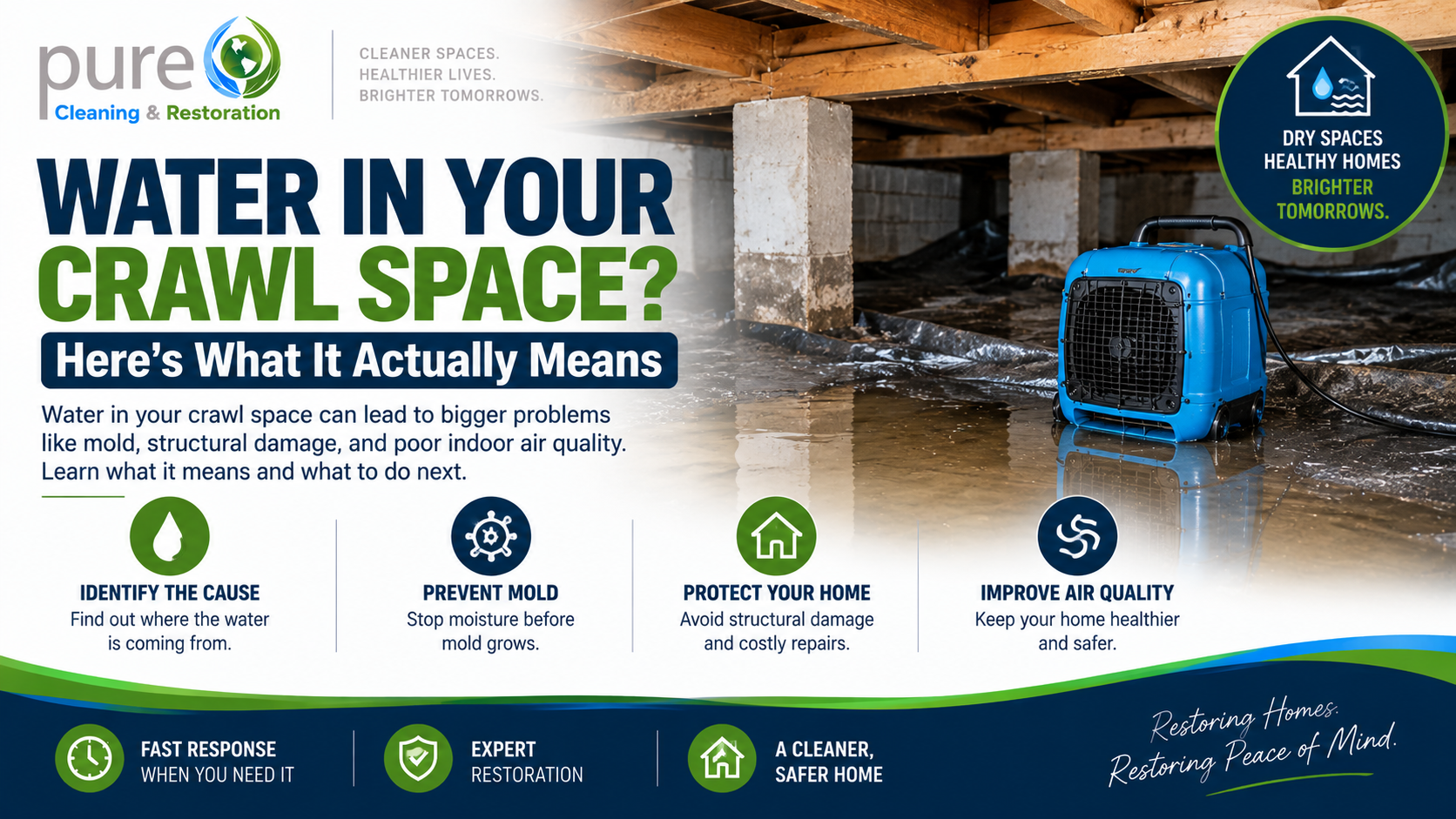
Crawl spaces are easy to ignore — they’re not a room anyone spends time in, and problems there don’t announce themselves the way a flooded kitchen does. That’s exactly what makes crawl space moisture worth paying attention to: by the time you notice a musty smell upstairs or an unexplained rise in humidity, the crawl space has often been dealing with the underlying problem for a while.
Why Crawl Space Moisture Matters More Than It Seems
Here’s the detail most homeowners don’t know: a meaningful share of the air in your living space actually passed through the crawl space first. Warm air rises and exits high in a home, and replacement air gets pulled in from the lowest available source — for a house on a raised foundation, that’s the crawl space, through gaps in the floor assembly. This is sometimes called the “stack effect,” and it means whatever is in your crawl space air — humidity, musty odor, mold spores, dust — doesn’t necessarily stay there.
This is why a damp crawl space isn’t just a structural concern. According to the EPA, crawl spaces with high relative humidity are common sites of hidden mold growth, particularly when the crawl space has a bare earth floor — soil wicks moisture through capillary action, and the relative warmth of the space evaporates that moisture into the air, creating ideal mold conditions.
What Causes Water or Moisture in a Crawl Space
- Bare soil floors — dirt continuously releases moisture into the air through evaporation, even without an active leak.
- Poor drainage around the foundation — gutters that don’t extend away from the house, or grading that slopes toward rather than away from the foundation, sends water directly toward the crawl space.
- Plumbing leaks — pipes running through the crawl space are a common, sometimes hard-to-notice leak source.
- Condensation — temperature differences between crawl space air and surrounding surfaces (ductwork, pipes) can cause condensation to build up over time, without any external water intrusion at all.
- High water table or seasonal groundwater — some crawl spaces sit close enough to the water table that seasonal changes alone bring moisture in.
- A failed or missing vapor barrier — and importantly, a vapor barrier installed without proper sealing or a way to manage standing water can sometimes trap moisture underneath it rather than solving the problem, actually making conditions worse.
Warning Signs of a Crawl Space Moisture Problem
Since crawl spaces are rarely visited, these are the signals that usually show up somewhere else in the house first:
- A persistent musty or earthy smell, especially near floor vents or on the first floor
- Noticeably higher indoor humidity, even with air conditioning running
- Visible mold or discoloration on floor joists or subflooring, if you do look
- Buckling or warping hardwood floors on the level directly above the crawl space
- Increased pest activity — moisture attracts termites, ants, and rodents
- Higher energy bills, since a damp crawl space affects insulation performance and forces HVAC systems to work harder
How Serious Is It, Really?
It depends on degree. A small amount of ambient humidity in a well-ventilated crawl space isn’t automatically an emergency. But relative humidity consistently above roughly 60-65% creates conditions where mold and dust mites thrive, and if left unaddressed, sustained moisture can lead to genuine structural concerns — wood rot in floor joists and subflooring, and the mold and air quality issues discussed above. The key word is sustained: an isolated damp period after a heavy rain is different from a crawl space that stays consistently humid.
What Homeowners Can Reasonably Check Themselves
- Grading and gutters — confirm downspouts extend water at least several feet from the foundation, and that ground slopes away from the house.
- A quick visual check (if the crawl space is safely accessible) — look for standing water, visible mold, or a sagging vapor barrier.
- A humidity reading — an inexpensive digital thermo-hygrometer placed in the crawl space gives you an actual number rather than a guess. Readings consistently above 60% are worth addressing.
When to Call a Professional Instead
- Standing water that needs pumping or drainage work, not just surface moisture.
- Visible mold covering more than a small area — larger mold growth shouldn’t be disturbed without proper containment, since disturbing it can release spores into the crawl space air (and, per the stack effect above, potentially into your living space).
- Sagging floors or soft, damaged joists, which may indicate structural wood rot beyond a simple moisture fix.
- HVAC equipment or gas appliances located in the crawl space, where moisture and safety concerns intersect.
- A musty smell that persists even after addressing obvious drainage issues, which often means there’s a source that hasn’t been found yet.
Our water damage restoration team handles basement and crawl space water extraction and structural drying with equipment designed for Utah’s specific climate and soil conditions, and our mold remediation team follows EPA and IICRC guidelines for safe removal if mold has already developed.
Frequently Asked Questions
Is a musty smell always coming from the crawl space?
Not always, but it’s one of the most common sources, especially if the smell is more noticeable on the first floor or near floor vents. The “stack effect” means crawl space air genuinely circulates into living spaces above it.
What humidity level is considered a problem in a crawl space?
Relative humidity consistently above roughly 60-65% creates conditions favorable for mold and dust mites. A digital thermo-hygrometer placed in the crawl space gives an actual reading rather than a guess.
Does a vapor barrier alone fix crawl space moisture?
Not necessarily. A vapor barrier without proper sealing or a way to manage standing water can sometimes trap moisture underneath it, which can make the problem worse rather than better. It needs to be part of a complete approach, not a standalone fix.
Can crawl space moisture affect my health?
Indirectly, yes. Mold spores and musty odor compounds from a damp crawl space can circulate into living spaces through the stack effect, which can contribute to allergy symptoms or respiratory irritation for sensitive individuals.
Should I check my crawl space myself or call a professional right away?
A basic visual check and a humidity reading are reasonable for most homeowners. Standing water, significant visible mold, or structural concerns like sagging floors are situations where professional assessment is the safer next step.
Final Thoughts
Crawl space moisture is easy to overlook because it’s out of sight, but it doesn’t stay contained the way it seems like it should — humidity, odor, and mold spores genuinely make their way into the air you breathe upstairs. A musty smell, rising indoor humidity, or visible mold are all worth investigating rather than dismissing, and the fix ranges from a simple grading adjustment to professional water extraction and mold remediation depending on how far it’s progressed.
Sources
US EPA (Mold Course Chapter 2) · Building science and crawl space moisture control research (Howard Environmental, Basement Waterproofing Scientists)